Lake District National Park – England

national parks of the world   lakes district national parks england  national park

Lake District National Park

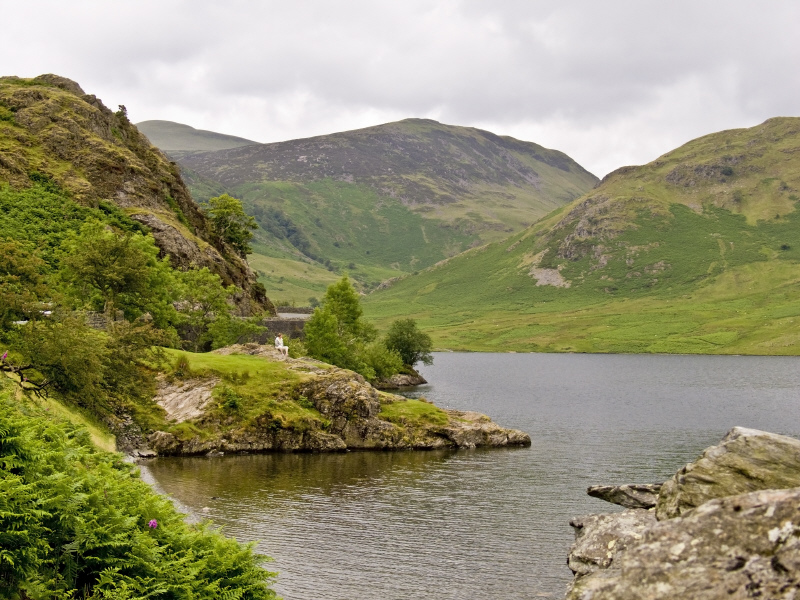
A mountainous region in North West England, the Lake District, also known as The Lakes is famous for its beautiful lakes and scenic forests. Lake District National Park is England’s largest national park and comprises most the Lake District except the Lake District Peninsulas lying in the south. Lake District National Park contains Scafell Pike, the highest mountain in England at nearly 1,000 meters (over 3,200 feet). The national park also contains England’s deepest lake, Wast Water, and England’s longest lake, Windermere.

http://youtu.be/ANRzwa4z9nY

Lake District National Park is the most visited national park in the England with nearly 16 million visitors each year. As in England’s other nine national parks there is no restriction on entry to the park along public routes, however access to farmed land is generally restricted to public footpaths. Unlike the national parks in the United States and many other countries, most of the land in Lake District National Park is in private ownership. The National Trust owns about a quarter of the land, the United Utilities owns eight percent and Lake District National Park Authority owns nearly four percent, with the remainder belonging to private owners.

England’s national parks are not wilderness areas, unlike national parks in other parts of the world. People live and work within the national parks and much of the land is farmed. There are roads, houses, shops and businesses within Lake District National Park. In fact, Lake District National Park is one of the most highly populated national parks in England. There are a handful of towns within this mountainous area including the four largest, Keswick, Windermere, Ambleside, and Bowness-on-Windermere. There are also a number of smaller villages in the area. Today, the economies of almost all are intimately linked with the national park’s tourism. While the lakes and mountains provide spectacular scenery, the farmland and villages which have been in this area for thousands of years, add to the natural beauty of this scenic region. However, the Lake District National Park was not approved as a natural World Heritage Site, because of these human activities, which adversely impacted the park’s UNESCO assessment.

The Lake District National Park has many glacial valleys containing numerous lakes which are what gave the area its name. The mountains of the Lake District National Park are rocky and moorlands are found at lower altitudes. The national park’s maritime climate provides for relatively moderate temperatures most of the year. Snow fall can occur between November and April at the higher elevations, however, hill fog is common year around and sunshine in the national park only averages between two and five hours per day, depending on the elevation and the time of the year.

Its location on England’s northwestern coast and its mountainous geography, all help to make Lake District National Park one of the dampest places in England. This provides an excellent home for the numerous mosses, ferns, lichen, and liverworts that thrive in the national park. Colonies of sundew and butterwort, two of the few carnivorous plants native to Britain, are also found in Lake District National Park. Deciduous woodland, including British and European native oak woodlands are found on the national park’s slopes, supplemented by introduced conifer plantations.

These woodlands provide habitats for the national park’s wildlife. The Lake District National Park, one of the few places in England where red squirrels are still found, is a major red squirrel sanctuary and has the largest red squirrel population in England. Since its introduction into England, the gray squirrel has displaced most of England’s indigenous red squirrel population, but not in the Lake District National Park. The osprey and red kite have both been re-introduced into the national park. Some of the other bird species found in the Lake District include the ring ouzel, buzzard, redstart, dipper, peregrine and raven.

The magnificent landscape of Lake District National Park has been influential on the lives and works of some of England’s best-known writers. Two of the famous authors who have lived in this magical place include William Wordsworth, one of England’s most famous poets, and Beatrix Potter, author of some of the world’s most loved children’s books. Some of the other poets and writers who have spent inspirational time in the Lake District include Samuel Coleridge, Thomas de Quincey, John Ruskin, Percy Bysshe Shelley, Sir Walter Scott, Nathaniel Hawthorne, Robert Southey, Arthur Hugh Clough, Henry Crabb Robinson, Thomas Carlyle, John Keats, Lord Tennyson, Matthew Arnold, Felicia Hemans, Arthur Ransome and Gerald Massey. The Lake District’s ties to famous artists and writers has done much for the national park’s cultural tourism, which is becoming an increasing portion of the area’s tourist industry. Tourism, as one might expect is the Lake District National Park’s major economic impact.

Lake District National Park – For More Information see the official site
Posted in Uncategorized | Leave a comment

Mamili National Park – Namibia

national parks of the world  namibia national parks cape bufallo Nkasa Rupara National Park    Mamili National Park

Mamili National Park

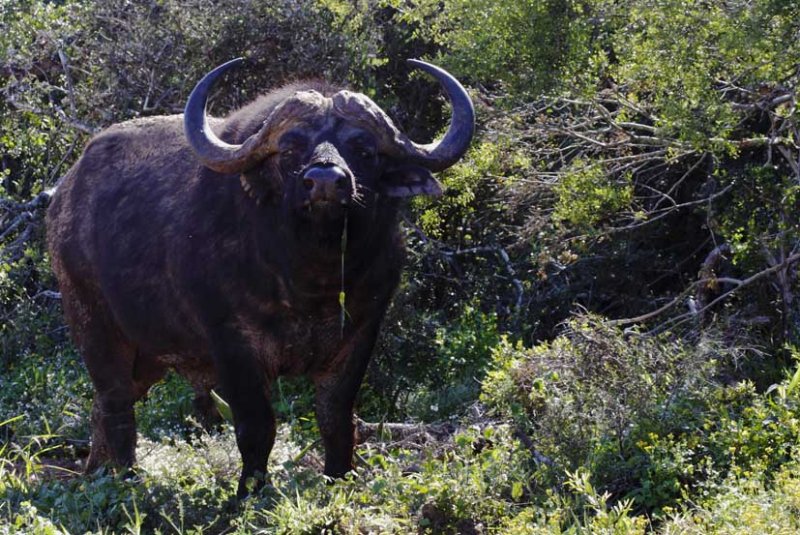
The Mamili National Park, recently renamed the Nkasa Rupara National Park, is located northeastern Namibia. Established in 1990, the Mamili National Park has not been fully explored. The national parks lies mainly in the Caprivi floodplains, which provide habitats for animals that live in swamps and floodplains such as the sitatunga, red lechwe, cape buffalo, hippopotamus, crocodile, and wild dog. The Mamili National Park is one of the last strongholds for the puka, and wattled cranes breed in the region.

The Mamili National Park has some serious problems that still need to be resolved. Every year during the dry season, nearly 5,000 elephants migrate to the waterholes of the Mamili National Park from the surrounding countries. The elephants cause widespread damage to the existing vegetation and contribute to the formation of new savannah. For the local farmers this is a big problem as their crops are often damaged by the elephants. The local people who live in the villages near the national park are also upset because of predators from the national park kill their livestock.

Scientists are working to find solutions so that wildlife and humans can live together as harmoniously as possible. In the long run, the wild animals are important to attract tourists to the Mamili National Park. Tourism brings work and money to the people of Namibia; however, it may still take some years before humans and animals are able to live together peacefully in this region of Namibia.

Mamili National Park – Other Information

Posted in Uncategorized | Leave a comment

Skeleton Coast National Park – Namibia

national parks of the world   Skeleton Coast National Park  Namibia national parks   dolphin   africa

Skeleton Coast National Park

The Skeleton Coast National Park lies on Namibia’s northwest coast on the edges of the Namib Desert. The national park is named for the bleached whalebones; and the skeletal remains and the rusted carcasses of the numerous shipwrecks that litter this stark, yet strikingly beautiful coastal landscape. Established in 1971, the Skeleton Coast National Park has diverse landscapes ranging from sand dunes and windswept plains, consisting largely of soft sand occasionally interrupted by rocky outcrops to towering canyons.

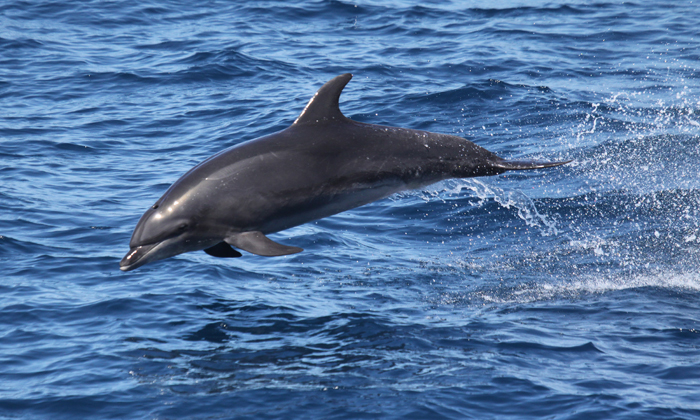
Wildlife species occurring in the national park includes the desert-dwelling, African elephant (Loxodonta africana), cape fur seal (Arctocephalus pusillus) , springbok (Antidorcas marsupialis), zebra (Equus burchellii), gemsbok (Oryx gazella), black rhino (Diceros bicornis), giraffe (Giraffa camelopardalis), crested porcupine (Hystrix africaeaustralis), genet (Genetta genetta), caracal (Caracal caracal), African wild cat (Felis sylvestris), hamadryas baboons (Papio hamadryasand), cape hare (Lepus capensis), and jackal (Canis mesomelas). Various dolphins and whales are occasional see offshore. Lions (Panthera leo) no longer make the national park their home, but sometimes stray into the national park from surrounding areas.

There are a number of bird species found in the Skeleton Coast National Park, including ostrich (Struthio camelus), common cape sparrow (Passer melanurus), titbabblers (Parisoma subcaerulum), mountain chats (Oenanthe monticola), redeyed bulbuls (Pycnonotus nigricans), bokmakierie (Telophorus zeylonus), mousebird (Colius spp.), Ruppell’s parrot (Poicephalus rueppellii), Egyptian goose (Alopochen aegyptiacus), redknobbed coot (Fulica cristata), rosyfaced lovebird (Agapornis roseicollis), avocet (Recurvirostra avosetta) and cape teal (Anas capensis).

Skeleton Coast National Park – Other Information

Posted in Uncategorized | Leave a comment

Murchison Falls National Park – Uganda

national parks of the world  Ugabda national parks  giraffe  Murchison Falls National Park

Murchison Falls National Park

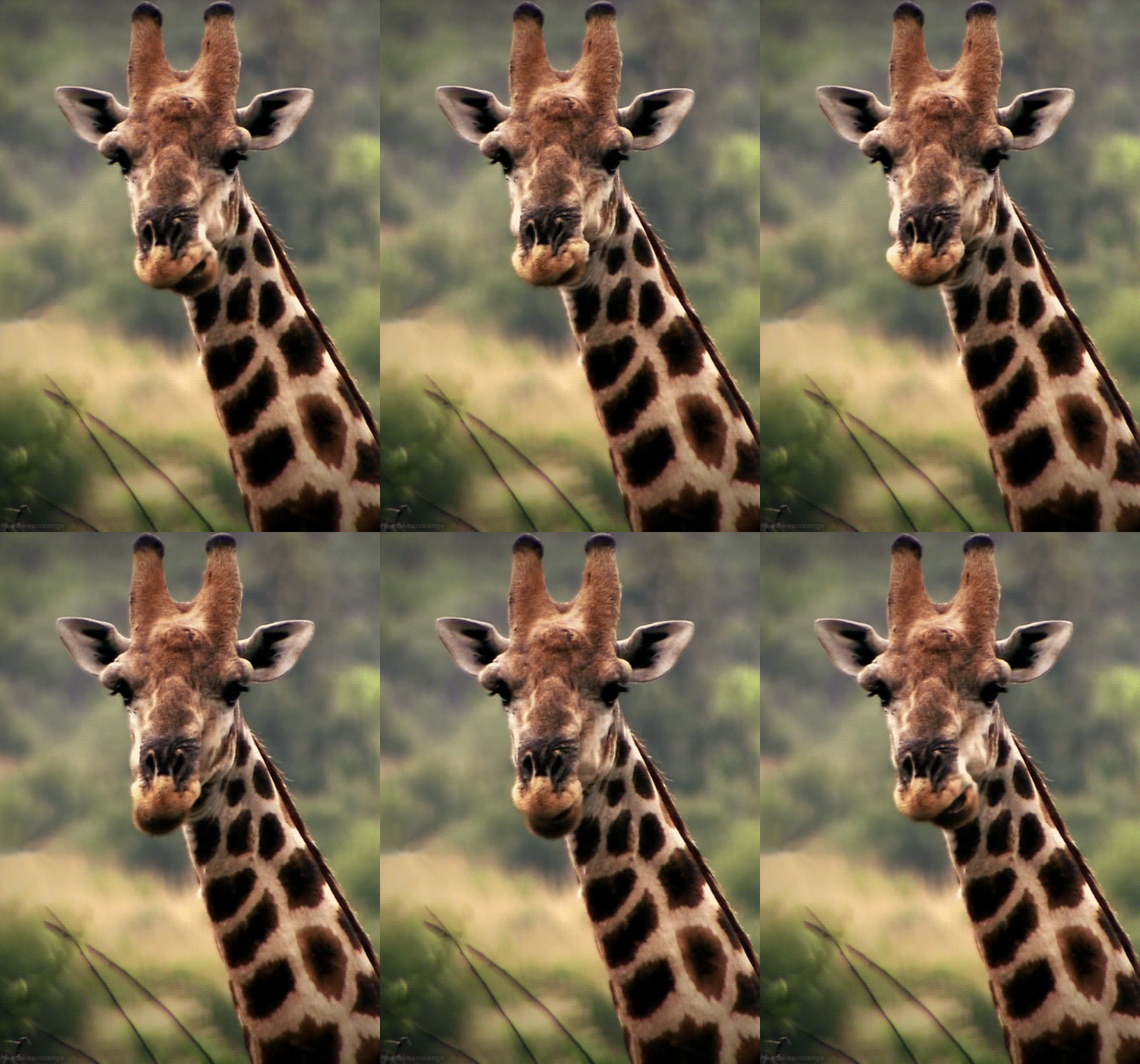
Murchison Falls National Park is the largest national park in Uganda. The national park is divided into the north and south portions by the Nile River, which runs east to west. As the Nile River flows over the western rift valley it forms Murchison Falls, one of the most powerful waterfalls in the world and the national park’s namesake. At the falls, the Nile River is forced through a 10 foot gap in the rocks and them cascades about 100 feet into the boiling pool below. Murchison Falls National Park contains woodland, wetland, savannah, as well as, tropical forest, and more than 75 mammal species and over 450 different bird species including elephant, buffalo, Nile crocodile, Rothschild’s giraffe, warthog, kob, hartebeest, cape buffalo, lion, leopard, hippopotamus, kingfisher, crocodile, several antelope species, a large collection of water birds, such as rare shoebill stork, that live along the Nile River. The Rabongo Forest in the southern portion of the national park, is also home to wild chimpanzees.

Game drives are available into Murchison Falls National Park. Also river cruises on the Nile River allow visitors to see wildlife from a different perspective, as well as, to see Murchison Falls. Visitors can also take a scenic trek up to the top of the waterfall for a whole new view. Nearby is Ziwa rhinoceros sanctuary. Ziwa is the only place in Uganda where you can view white rhinoceros on foot. Imagine walking up to within 30 feet of a huge white rhinoceros; that is a very memorable experience.

Posted in Uncategorized | Leave a comment

Pendjari National Park – Benin

national Parks Worldwide   benin elephants  pendjari national park

Pendjari National Park

The Pendjari National Park, now known as the Pendjari Biosphere Reserve, lies in northwestern Benin and was named for the Pendjari River, the only major river in the national park. The Pendjari National Park is adjacent to the Arli National Park just across the border in Burkina Faso. Both national parks are part of the WAP complex (W-Arli-Pendjari) which is one of the largest protected areas in West Africa stretching out into the three countries of Benin, Burkina Faso and Niger. The rocky cliffs of the Atakora mountain range provide a wonderful backdrop to the Pendjari National Park, and are sparsely wooded with Burkea africana, Detarium microcarpum, Lannea acida, Sterculia setigera and Combretum ghasalense. There is an impressive gallery forest along the Pendjari River within the national park. There are also grassland savannas containing Acacia sieberiana and Mitragyna inermis within the national park.

One of the most interesting national parks in West Africa, the Pendjari National Park is well known for its wildlife, including some of the last populations of African elephant, West African lion, hippopotamus, cape buffalo, Northwest African cheetah and various antelopes in West Africa. There are only a dozen, or less, cheetahs left in this national park. The lion population is nearly 100 and the elephant population is around 900. The population of the park’s cape buffalo is nearly 3,000 and most other big game species also have populations numbering in the thousands, rather the hundreds. Additional species of mammals living in the Pendjari National Par include leopard, olive baboon, spotted hyena, tantalus monkey, side-striped jackal, warthog, African civet, red-flanked duiker, patas monkey, oribi, and common duiker.

The Pendjari National Park is renowned for its wonderful birding opportunities with over 300 different species found in this national park, including Pied-winged Swallow (Hirundo leucosoma), White-crowned Robin-chat (Cossypha albicapillus), Botta’s Wheatear (Oenanthe bottae), African Openbill Stork (Anastomus lamelligerus), Abdim’s Stork (Ciconia abdimii), Familiar Chat (Cercomela familiaris), African Fish Eagle (Haliaeetus vocifer), White-fronted Black-chat (Myrmecocichla albifrons), Mocking Cliff-chat (Thamnolaea cinnamomeiventris), African Swallow-tailed Kite (Chelictinia riocourii), Common Rock Thrush (Monticola saxitilis), Senegal Eremomela (Eremomela pusilla), European White Stork (Ciconia ciconia), Saddle-billed Stork (Ephippiorhynchus senegalensis), Blackcap Babbler (Turdoides reinwardtii), Pel’s Fishing-owl (Scotopelia peli), Red-winged Pytilia (Pytilia phoenicoptera), Booted Eagle (Hieraaetus pennatus), Black-rumped Waxbill (Estrilda troglodytes), Togo Paradise-whydah (Vidua togoensis) and Bush Petronia (Petronia dentata).

Pendjari National Park – More Information

Posted in Uncategorized | Leave a comment

Lençois Maranhenses National Park – Brazil

Lençois Maranhenses National Park

Known as the Brazilian Sahara, Lençois Maranhenses National Park is larger than the city of Sao Paulo. The Lencois Marahenses National Park has a landscape with many typical desert characteristics.

The rainy season, from November to June, is so intense that gives birth to enormous temporary lagoons of crystalline fresh waters.

Nevertheless, these lagoons are populated by fishes that later will serve as prey to migrating birds, such as the Lesser Yellowlegs (Tringa flavipes). Meadows of white and golden sands, constantly shifting their shape according to the creative mood and whim of the winds, extend around these oasis as far as can meet the eye. Along 90 kilometres of littoral, beautiful, extended and deserted beaches get linked.

This marvellous ecological system is located in the State of Maranhao, in the north-eastern part of Brazil.

The level of its subterranean waters the ground are so close to the surface that a two metre pipe is enough to make this vital liquid outpour with an impetuous spout.

Many families migrate to the savannahs of Marahenses during the rainy season, and build makeshift huts on top of the meadows in order to make use of the fishing resources in the temporary lagoons. They abandon Lencois during the dry season to make a living out of farming by the riverbanks.

Tourists arrive in this part of Brazil to see the white meadows lining the horizon like cloths drying up under the sunrays. They consist of fine and light grains of quartz. Some resemble mountains up to 40 metres high and they sometimes cluster along 50 metres of beaches and inland deserts as well.

The lagoons, whose surfaces undulate with the strong trade winds, have colorations ranging from blue-turquoise to green-emerald, under a sky sometimes blue, sometimes packed with clouds.

The vegetation is limited to a relatively small area where mangroves can be seen nourishing at the damps and marshes close to the main or secondary river courses and at zones adjacent to the ocean as well.

The red mangrove can reach up to 12 metre heights. Other known species are the white mangrove and the so called Siriúba mangrove.

Diverse migratory birds nest close to the seashore such as the blue winged Cassin’s auklet (Ptychor amphus aleuticus australis) coming from territories within the United States between February and April. The woodcutter deer, the Southern Spectacle Caiman (Caiman jacare) and the Paca (Agouti paca) stand out at the mangrove stands.

The weather shows an average temperature of over 18° C though it can climb up to 40° C during the day. There are only the rainy and the dry seasons in here.

Posted in Uncategorized | Leave a comment

Hemis National Park – India

national park worldwide snow leopard   india hemis national park

The Hemis National Park covers around 4,000 square kilometers of the TransHimalayan Range in the eastern Ladakh region of the Indian state of Jammu and Kashmir. Hemis National Park, founded in 1981, is now the largest national park in India and the only Indian national park that is north of the Himalayas. Hemis occupies much of the catchment of the lower Zanskar River. The Indus River, India’s namesake, runs along the Hemis National Park’s northern border.

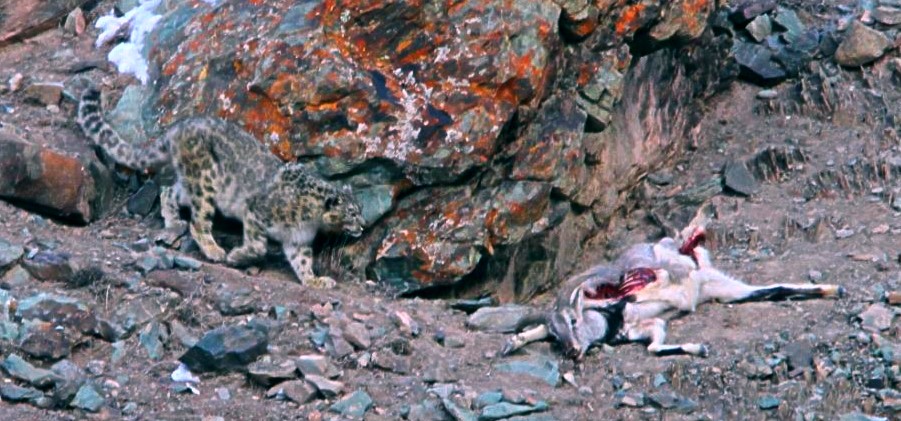
The national park is considered prime snow leopard (Panthera uncial) habitat, and has a breeding population of more than 200 snow leopards. Hemis National Park is also home to four species of wild sheep and goats that form the prey base for this apex predator, including Great Tibetan Sheep, locally called “Nyan” or “Argali”,(Ovis ammon); Himalayan blue sheep, locally called “Bharal” or “Naur”, (Pseudois nayaur); Uriel, locally called “Shapu” (Ovis orientalis) and Asiatic ibex (Capra sibirica).

There are 16 species of mammals and 73 species of birds found in Hemis National Park, including the snow leopard (Panthera uncial), Tibetan wolf (Canis lupus), Eurasian brown bear (Ursus arctos), red fox (Vulpus vulpus), Dhole (Cuon alpinus) Himalayan marmot, mountain weasel (Mustela altaica), Himalayan mouse hare (Ochotona roylei), golden eagle (Aquila chrysaetos), Lammergeier bearded vulture (Gypaetus barbatus) Himalayan griffon vulyure (Gyps himalayensis), brown accentor (Prunella fulvescens), robin accentor (Prunella rubeculoides, Tickell’s leaf warbler (Phylloscopus affinis), streaked rosefinch (Carpodacus rubicilloides), Tibetan snowfinch (Montifringilla adamsi), chukar(Alectoris chukar), fork-tailed swift (Apus pacificus), red-billed chough (Pyrrhocorax pyrrhocorax), Himalayan snow cock (Tetraogallus himalayensis), and fire-fronted serin(Serinus pusillus).

Hemis National Park also contains many Buddhist monasteries, called “gompas”, including the famous 400-year old Hemis Monastery. Each summer, the historic Hemis Monastery hosts ‘Hemis Tsechu”, the two-day Hemis Festival honoring Padmasambhava.

There are also about 1,600 Ladakhi people living in small villages scattered across the three main valleys of the national park, the Sumdah in the north, the Markha in the south, and the Rumbak in the northeast, These people are mostly farmers who grow barley and a few vegetables. Many also own livestock, an estimated 4,000 head of livestock, mostly consisting of sheep, goats, yaks, and cattle.

Hemis is mainly visited by trekkers since there are no motorable roads that traverse Hemis National Park. In winter, temperatures are close to freezing during the day and drop well below freezing at night. Since the winters are very harsh, most park visitors come during the summer. Unfortunately, the best season for spotting a snow leopard is in late winter. March to May and September to December are considered the best seasons for bird-watching. Lodging is also restricted to backcountry camps, villager homestays and accommodation at the monasteries. The tourists who visit Hemis National Park provide an important source of supplementary income to the village people. An estimated 5,000 visitors each year use the Markha Valley circuit, one of the most popular trekking routes running through the Hemis National Park.

There are several ways to get to Hemis National Park. The closest city to the park is Leh, about 40 kilometers away. Indian Airlines has flights to Leh. Once in Leh, bus service is available from Leh to Hemis National Park. Or instead, a private vehicle can be driven from Leh to the national park. If you would like to trek to Hemis National Park, a popular trekking route leaves from the Spituk Gompa just below Leh, and runs through the Jingchen valley onto Gandu La and the Markha valley, and then proceeds to the national park via Kongmaru La.

Posted in Uncategorized | Leave a comment

Shey-Phoksundo National Park – Nepal

national parks worldwide   snow leopard  nepal

The Shey-Phoksundo National Park

Shey-phoksundo National Park, Nepal’s largest National Park, is situated in the Trans-Himalayan region of northwest Nepal. The national park was established in 1984 within an area of 3,555 square kilometers. In 1998, an additional 1349 square kilometers of forests and private lands surrounding the park became the Shey-phoksundo National Park’s buffer zone. This buffer zone is jointly managed by park officials and members of the local community. Together they have initiated community development activities designed to preserve the natural resources within the buffer zone and educate the local people about the importance of wildlife conservation and the national park.

Nepal’s deepest and second largest lake, Phoksundo Lake, and its highest waterfall, which is near Phoksundo Lake’s outlet, are both located in Shey-phoksundo National Park. Many beautiful glaciers are also found near and above the lake area. Phoksundo Lake is famous for the beautiful turquoise color of its water and the spectacular landscapes that surround it. Shey-phoksundo National Park is clearly one of the most scenic mountain parks in the world. Shey-phoksundo National Park also contains a number of monasteries (known as “Gompas”) and other religious area. The most famous of these monasteries, Shey Gompa dates back to the 11th Century.

national parks nepal 01

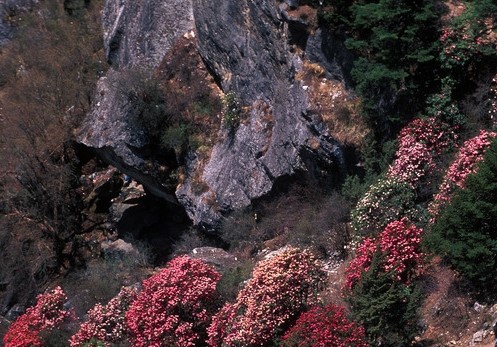
Elevations in the national park range from around 2,000 meters to nearly 7,000 meters above sea level. The park’s extreme variation in altitude results in large climatic differences and ultimately a diverse range of biotic systems. This is reflected in the extreme diversity of flora found in Shey-phoksundo National Park. Less than five percent of the park is forested, with much of the forested area lying in the southern portion of the park. This forested area contains blue pine, spruce, cedar, silver fir, hemlock, poplar, bamboo, and rhododendron. Moving north in the national park the altitude rises and the vegetation transitions to fewer rhododendron, and more caragana shrubs, Salix, Juniper, white Himalayan birch, and the occasional silver fir. Moving still farther to the upper Himalayas, flora becomes sparser and sparser until there is only barren ground.

More than 30 species of mammals, over 200 species of birds and several reptiles are found in Shey-Phoksundo National Park. The park provides prime habitat for the snow leopard and its primary prey, the blue sheep. Some of the other wildlife species that make Shey-phoksundo National Park home, include Asian leopard, musk deer, Himalayan tahr, ghoral, goral, toral, serow, jackal, wild dog, Tibetan wolf, Himalayan black bear, Himalayan weasel, Himalayan mouse, hare, rhesus monkey, grey langur, Tibetan partridge, yellow-throated marten, wood snip, blood pheasant, white-throated tit, red and yellow billed cough, raven, jungle crow, snow partridge, the Impeyan pheasant, wood accentor, and crimson-eared rosefinch, Himalayan griffon, white breasted deeper, moral pheasant, and cheer pheasant. Shey-Phoksundo National Park also has nearly 30 species of butterflies, including Paralasa nepalaica, which is the highest flying butterfly on earth. The park also contains just six reptiles.

The easiest way to reach the park is by air from Nepalgunj to the Juphal airstrip in Dolpa followed by a half day walk to the park entrance at Suligad. Local accommodations are available in Dunai, Sangta, Chhepka, and Ringmo. Campsites with rubbish pits, toilets, and shelters are available throughout the park. Trekking lodges are located in Dunai, Chhepka, and Ringmo and provide food and limited supplies. Park offices are located at Suligad, Chhepka, Palam Ringmo, and Toijem, at the headquarters in Palam there is a small visitor center. Individual trekking is permitted to trek to Ringmo or Phoksundo Lake. The Tran-Himalayan region of inner Dolpa is restricted to group trekking only, a group trekking permit is needed and can be arranged through any recognized trekking agency of Nepa

Posted in Uncategorized | Leave a comment

Bardia National Park – Nepal

nationak parks worldwide  tiger Bardia National Park nepal

Bardia National Park

Bardia National Park is located in in Nepal’s western Terai, just east of the Karnali River, the longest river in Nepal. Bardia is the largest national park found in the lowland Terai. Bardia National park, which includes the Karnali flood plain, much of the Babai valley, and extends into the Siwaliks range in the north, covers an area of 968 square kilometers. Much of the parks southern border lies near the Mahendra Highway, also called the East West Highway. The nepaljung surket highway runs along the parks eastern border and the Babai River runs through the middle of the park. In 1997, a buffer zone consisting of 327 square kilometers of forests and private lands surrounding the park was created. This buffer zone is jointly managed by park officials and members of the local community. Together they have initiated community development activities designed to preserve the natural resources within the buffer zone and educate the local people about the importance of wildlife conservation and the national park.

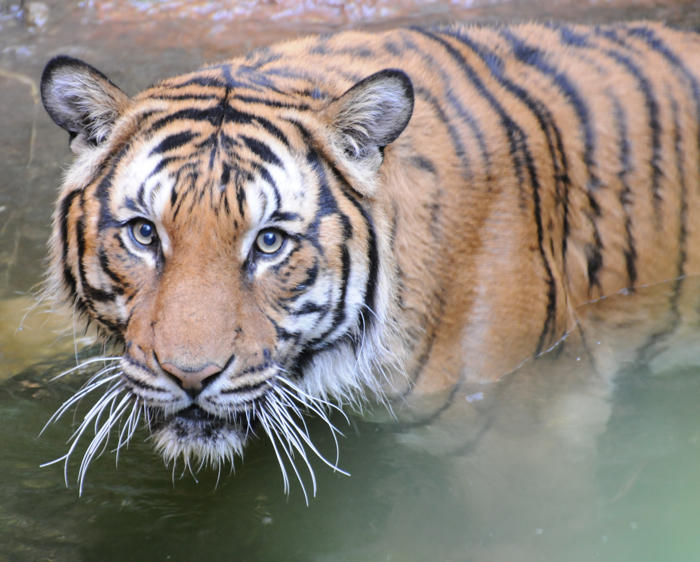
Bardia National Park is a key element in Nepal’s efforts to preserve the Bengal tiger and its prey species, while protecting the related ecosystems. The park initially began as a small area known as the Karnali Wildlife Reserve in 1976. It was renamed the Bardia Wildlife Reserve In 1982, extended to its current size in 1984 and in 1988, Bardia was given National Park status. Today there are nearly 50 Bengal tigers that make Bardia National Park their home.

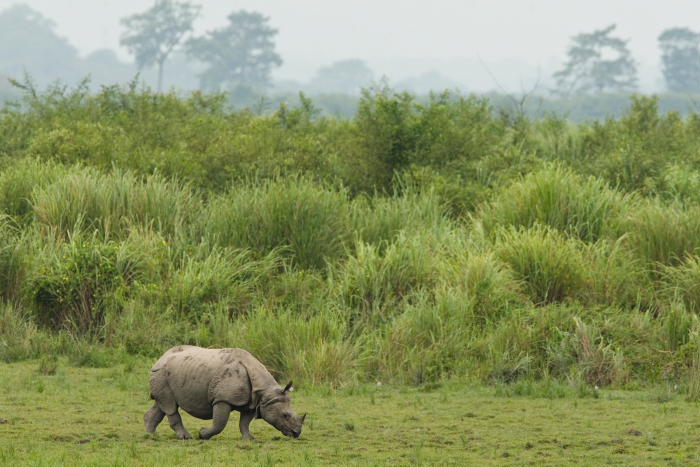
Bardia National Park has also become an important sanctuary for the greater one-horned rhinoceros. The rhinoceros was re-introduced into the area from Chitwan National Park in 1986. With careful management and several other relocations from the Chitwan National Park, Bardia National Park now has over 80 rhinoceros living within its boundaries.

Conservation efforts have also seen a return of the Asian elephant to the Bardia National Park. The elephant population has grown from a handful of individuals in the early 1990’s to over 60 today. Domesticated elephant rides are provided in Bardia National Park allowing visitors the opportunity to go off the main trails and enjoy the wildlife of more remote areas of this national park.

Nearly 60 species of mammal, over 400 species of birds, more than 50 species of reptiles and amphibians, and over 120 fish species can be found in Bardia National Park. The park, which is nearly 70 percent Sal forest, provides excellent habitat for many endangered species of animals including the tiger, rhinoceros, wild elephant, black buck, gharial, Bengal florican, lesser florican, silver eared mesia and Sarus crane. The Karnali River is also home to the endangered South Asian river dolphin (Platanista gangetica). Bardia National Park includes a thickly forested, sub-tropical jungle, as well as several open grasslands. Other animal species found in Bardia National Park include swamp deer, hog deer, spotted deer, barking deer, samba deer, Himalayan black bear, sloth bear, grey langur, rhesus macaque, civet, hyena, wild dog, otter, wild boar, nilgai, leopard, cormorants, egret, herons, wall creepers, stork, geese, jungle foul, kingfishers, hornbills, soft-shelled turtle, mahseer fish and marsh crocodile

The park operates a crocodile (both the rare gharial and the marsh mugger crocodile) breeding center that raises crocodiles for eventual release back into the national park. The Bardia National Park also has an elephant rehabilitation center for Asian elephants rescued from private owners, orphaned by poachers or sent to Bardia by other wildlife agencies.

National Parks Worldwide  one-horned rhino nepal Bardia National Park

The months of September, November, February and April are the best for birdwatching. During these months migratory birds arrive; increasing number of bird species that are present in the national park.

While most of the national park is covered with Sal trees, areas of grasslands and riverine forests can also be found in this national park. Over 8oo species of plants, including more than 170 species of trees, are found in Bardia National Park.

There are many ways to explore the Bardia Nation Park and the surrounding area which allow the visitor to target different wildlife and cultural experiences. Treks and bird watching walks into the park and surrounding areas usually take a half or full day. Elephant safaris (riding on the back of an elephant), usually lasting one or two hours, go into the park in the early morning and late afternoon. Rafting and canoeing trips are some of the best ways to see a variety of the park’s wildlife, including the endangered South Asian dolphin. Most rafting trips starts near the Karnali bridge, finishing near the Elephant stables. Jeep drives allow the visitor to see more of the national park in a shorter period. Cycling tours are also available to visit the areas around the national park.

There are three distinct seasons in Bardia National Park. From October to April the park is usually dry, with warm days and the cool nights. This is the best time to visit Bardia National Park. In April the temperature begins to rise and the days become hot and humid. The temperature can reach up to 45ºC in May. In June the monsoon rainy season begins and continues through September. It is unwise to visit the park during the monsoon season as the rains can last for days and transportation is severely limited by the extremely poor conditions of the roads.

Bardia National Park can be reached by bus, car or airplane. There is both bus and airline service from Kathmandu to Nepalgunj. The bus trip takes nearly 15 hours, however, the scenery along the way is beautiful as you pass through mountains and forests until you reach the flat Terai plains. The bus trips costs about the equivalent of US$20. Bardia National Park is about 90 kilometers from Nepalganj. Bus service is available from Nepalgunj to the park’s headquarters at Thakurdwara during the dry season. The trip takes two to three hours. Taxis are also available from Nepalganj and can reach Bardia National Park in about one and half hours. If you are traveling by private vehicle make sure that you have plenty of fuel, as there are no filling stations in the park area.

The Bardia National Park headquarters is located in Thakurdwara; where there is an information center, a small wildlife museum, and a Tharu ethnographic museum for visitors. The Tharu museum contains exhibits of costumes and household objects which highlight the culture, traditions and lifestyle of the Tharu people; an indigenous people native to the Terai area. Many Thar currently live on southern fringes of the national park’s buffer zone. Historically, the Thar have been subsistence farmers and practiced their own form of tribal religion. Visitors can take a tour to a nearby Tharu village to see the current lifestyle of these indigenous people. A dance and cultural program performed by the Tharu is also available for visitors to attend and handicrafts made by community members are available for purchase by visitors as souvenirs.

It is important to carry a comprehensive first aid kit, which contains medicines for intestinal problems, as there are no proper medical facilities available in or near the national park.

Posted in Uncategorized | Leave a comment

Sagarmatha National Park – Nepal

Sagarmatha National Park is located to the northeast of Kathmandu in Nepal. The park is largely composed of rugged terrain and gorges of the high Himalayas and includes the highest peak in the world, Mt. Sagarmatha (Everest), as well as, several other well known peaks such as Lhotse, Nuptse, Cho Oyu, Pumori, Ama Dablam, Thamserku, Kwangde, Kangtaiga and Gyachung Kang. Sagarmatha National Park is a UNESCO World Heritage Site.

The Himalayas were formed by the collision of the Indian sub-continent with Eurasia, which began about 50 million years ago and continues today. The oceanic crust in front of India slid under Eurasia, pushing up the Tibetan plateau. The Indian continental crust is also pushing under Tibet, but is partly compressed and thrust upward to form the Himalayan mountain range, extending for over 2400 km and rising as high as 8848 m at Mt. Everest. According to this continental-drift theory, the Himalaya were uplifted at the end of the Mesozoic Era, some 60 millions years ago. The resulting young mountains of this region are still rising and the net growth is a few centimeters per century.

The mountains of Sagarmatha National Park are geologically young and broken up by deep gorges and-glacial valleys. Vegetation includes pine and hemlock forests at lower altitudes, fir, juniper, birch and rhododendron woods, scrub and alpine plant communities, and bare rock and snow. The famed bloom of rhododendrons occurs during spring (April and May) although other flora is most colorful during. the monsoon season (June to August).

Vegetation in the park varies from pine and hemlock forests at lower altitudes, fir, juniper, birch and rhododendron woods at mid-elevations, scrub and alpine plant communities higher up and bare rock and snow above tree line. The famed bloom of rhododendrons occurs during the spring (April and May) although much of the. flora is most colorful during the monsoon season (June to August). .

The vegetation found at the lower altitude of the park include pine and hemlock forests, while fir, juniper, birch and rhododendron, scrub and alpine plant communities are common at the higher altitude. The park is home to the red panda, snow leopard, musk deer, Himalayan tahr (Hemitragus jemlahicus), weasel, jackal, langur monkey, marten, Himalayan Pika (Ochotona himalayana) and nearly 120 species of bird including the Impeyan pheasant, snow cock, blood pheasant, cheer pheasant, jungle crow, red billed and yellow billed coughs, snow pigeon, Himalayan griffon, lammergier, snow partridge, and skylark.

Government of Nepal has declared a buffer zone in and around the park in 2002 with the objective of reducing biotic pressure in the slow growing vegetation. The government has also made a provision of plowing back 30 – 50 percent the revenue earned by the park to community development activities in the buffers zone. In collaboration with local people it aims to conserve biodiversity in the region. Popular Trekking Routes The trek from Namche to Kala Pathar is very popular. The Gokyo Lake and Chukung valleys also provide spectacular views. The Thame Valley is popular for Sherpa culture while Phortse is famous for wildlife viewing. There are some high passes worth crossing over. However, the trekkers must have a guide and proper equipment for the trek.
The park is populated by approximately 3,000 of the famed Sherpa people whose lives are interwoven with the : teachings of Buddhism. The main settlements are Namche Bazar, Khumjung, Khunde, Thame, Thyangboche, Pangboche and Phortse. The economy of the Khumbu Sherpa community has traditionally been heavily based on trade and livestock herding. But with the coming of international mountaineering expeditions since 1950 and the influx of foreign trekkers, the Sherpa economy today is becoming increasingly dependent on tourism.

Sagarmatha National Park – For More Infomation

Posted in Uncategorized | Leave a comment